

Blog Details
- Home
- Blog Details
Why Keyword Monitoring Matters for SEO Success?
Keywords are important search terms that you incorporate into your content to help search engines understand its relevance and present it to the right audience. However, merely adding them isn’t enough.
You also need to track their performance, as it indicates how effective your SEO strategy is. This process of tracking keyword performance is known as keyword
monitoring. It not only helps you identify gaps in your SEO strategy but also allows you to uncover new opportunities, improve rankings, and drive more organic traffic.
This blog covers everything you need to know: what keyword monitoring is, why it's a non-negotiable part of any serious SEO strategy, how to do it effectively, and the best practices that separate top-ranking sites from the rest.
What is Keyword Monitoring?
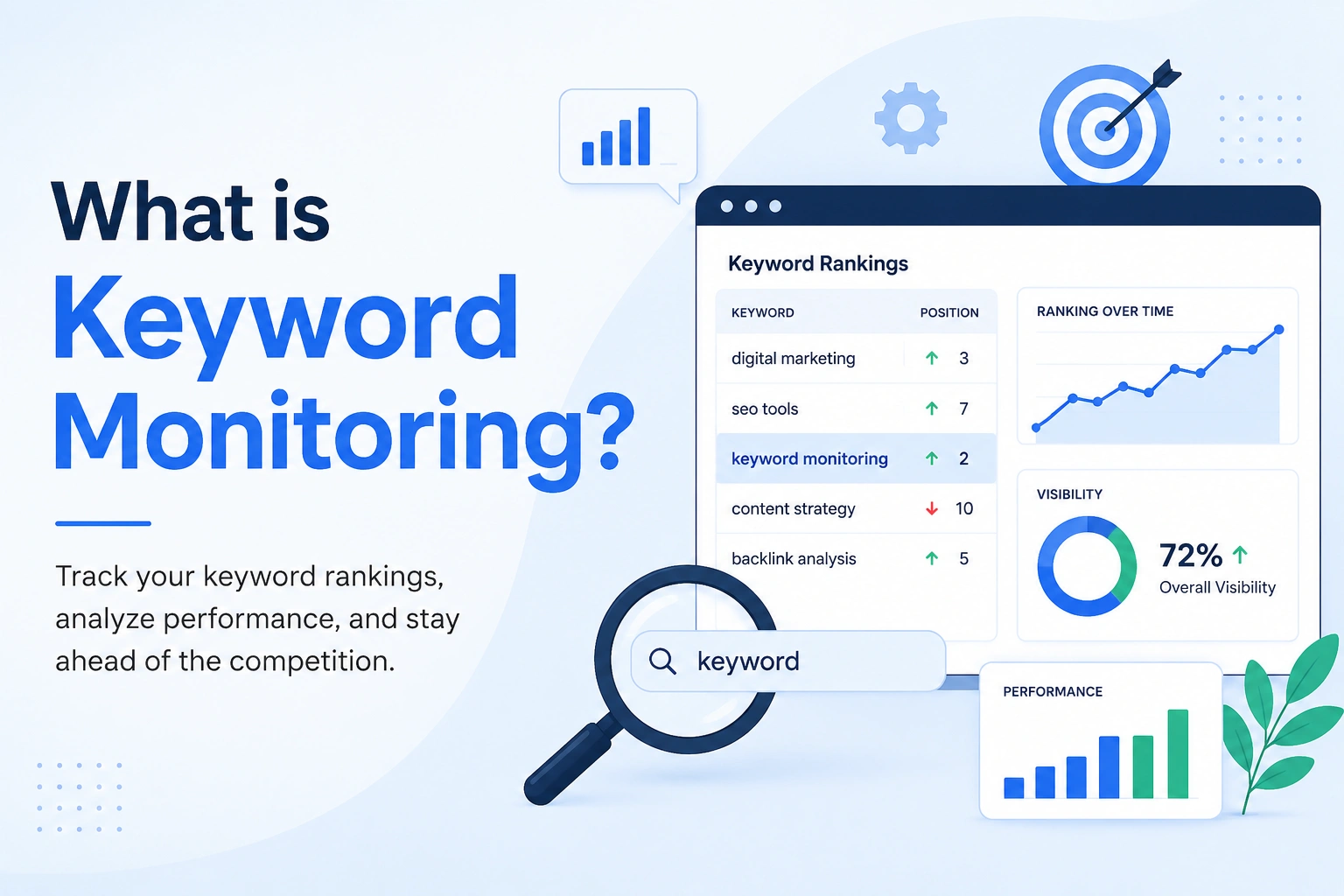
Keyword monitoring is the practice of tracking how your target keywords perform in search engine results pages (SERPs) over time. It gives you a clear, data-backed picture of how well your content and overall SEO strategy are resonating with both search engines and users.
Beyond rankings, it surfaces insights into evolving user search intent, helping you understand which topics still resonate with your audience and which have fallen out of favour.
Why is it Important to Monitor Keywords?
Keyword monitoring is crucial because it is one of the key indicators of how effective your SEO strategy is. To gain a deeper understanding of keyword rank monitoring, let’s review the following points:
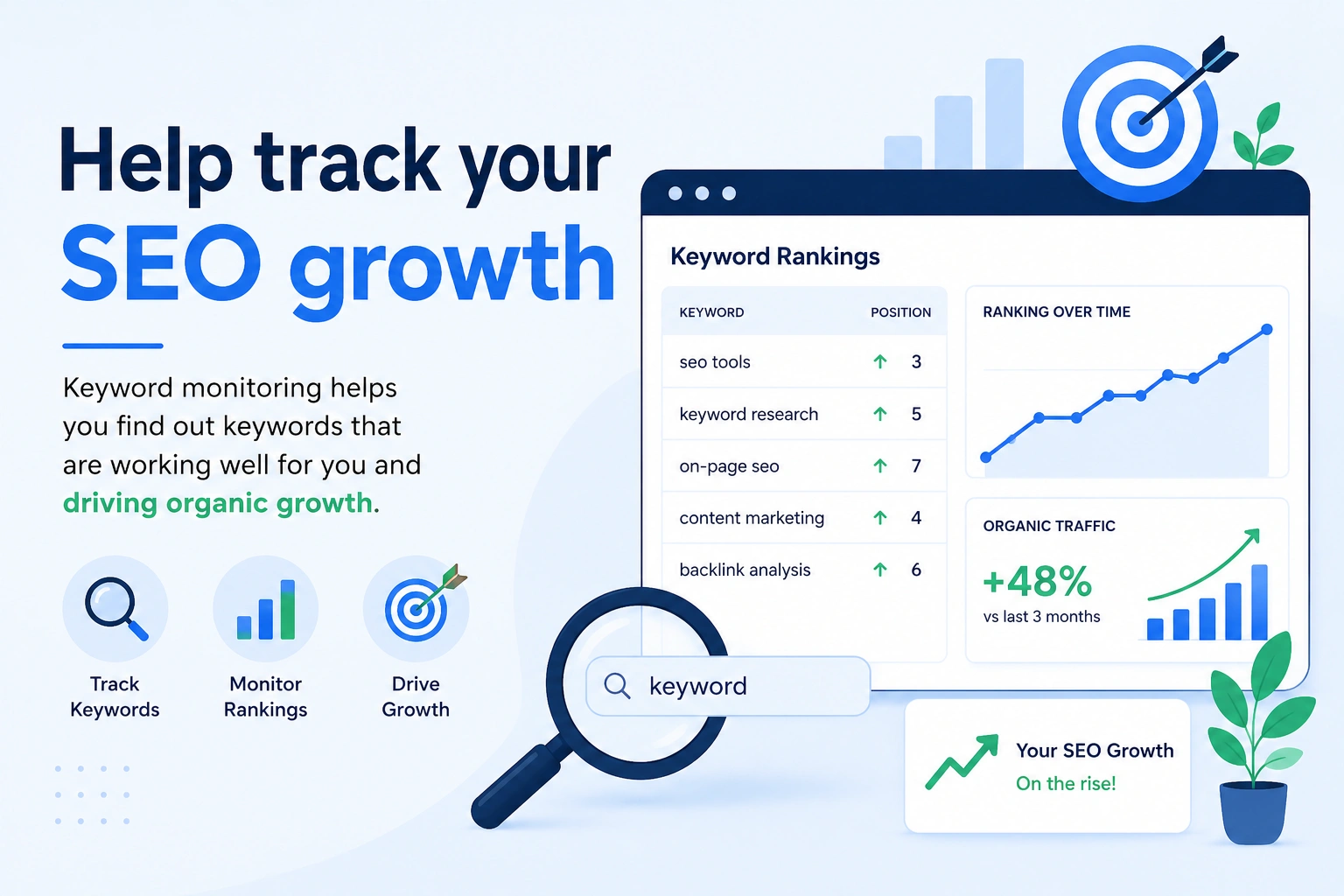
1. Help track your SEO growth
Keyword monitoring helps you find out keywords that are working well for you and driving organic growth.
For example, if you run a web design agency and notice that 'responsive website design for small businesses' is steadily climbing in rankings and driving traffic, you can double down by creating more tutorials, case studies, and service pages.
2. Enhance your On-Page SEO performance
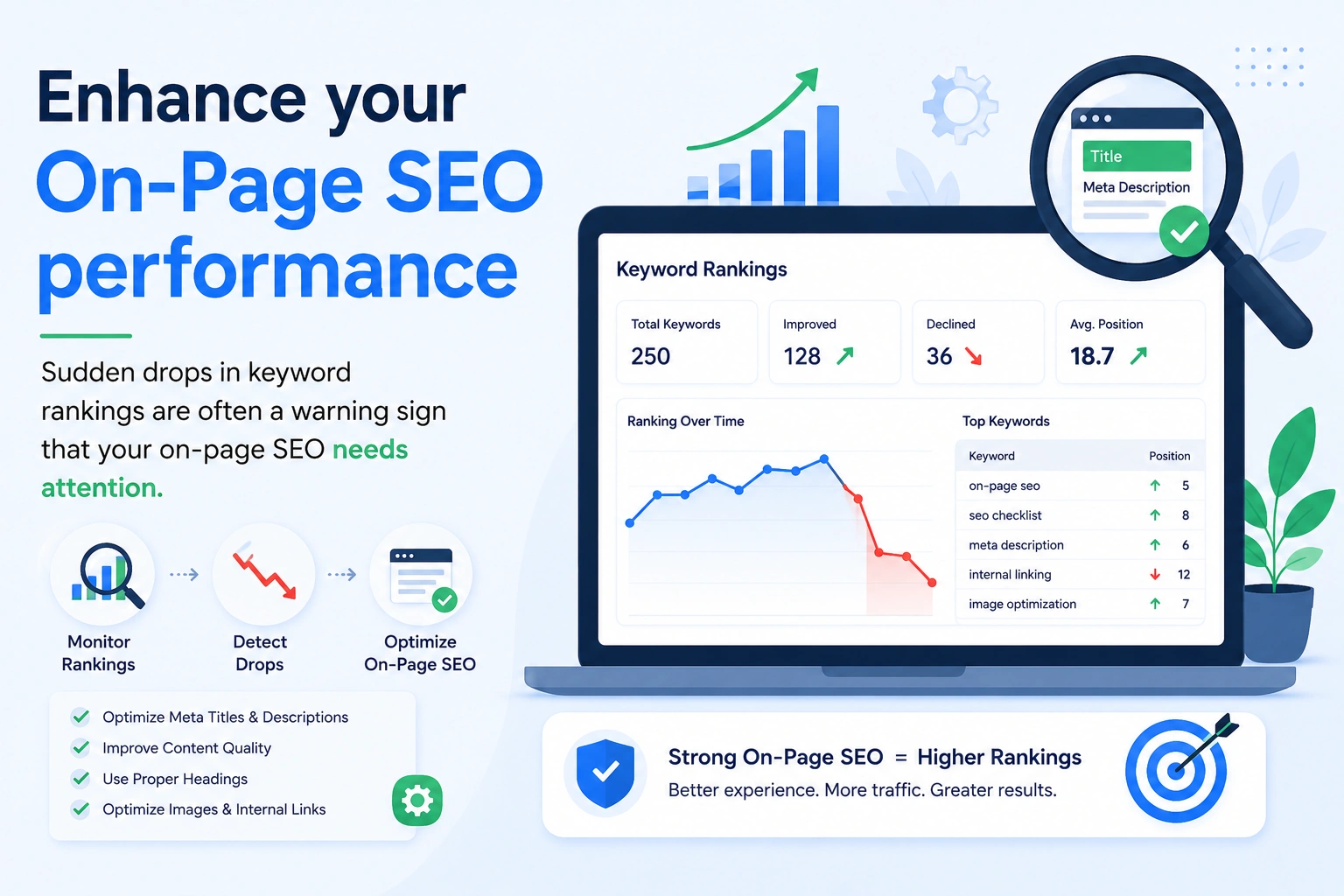
Sudden drops in keyword rankings are often a warning sign that your on-page SEO needs attention.
For example, your content may be misaligned with what users are actually searching for, difficult to read, missing critical elements like title tags and alt text, or suffering from a broken heading structure.
Keyword monitoring acts as your early-warning system; it catches these ranking dips before they silently drain your organic traffic.
3. Track Competitor Rankings
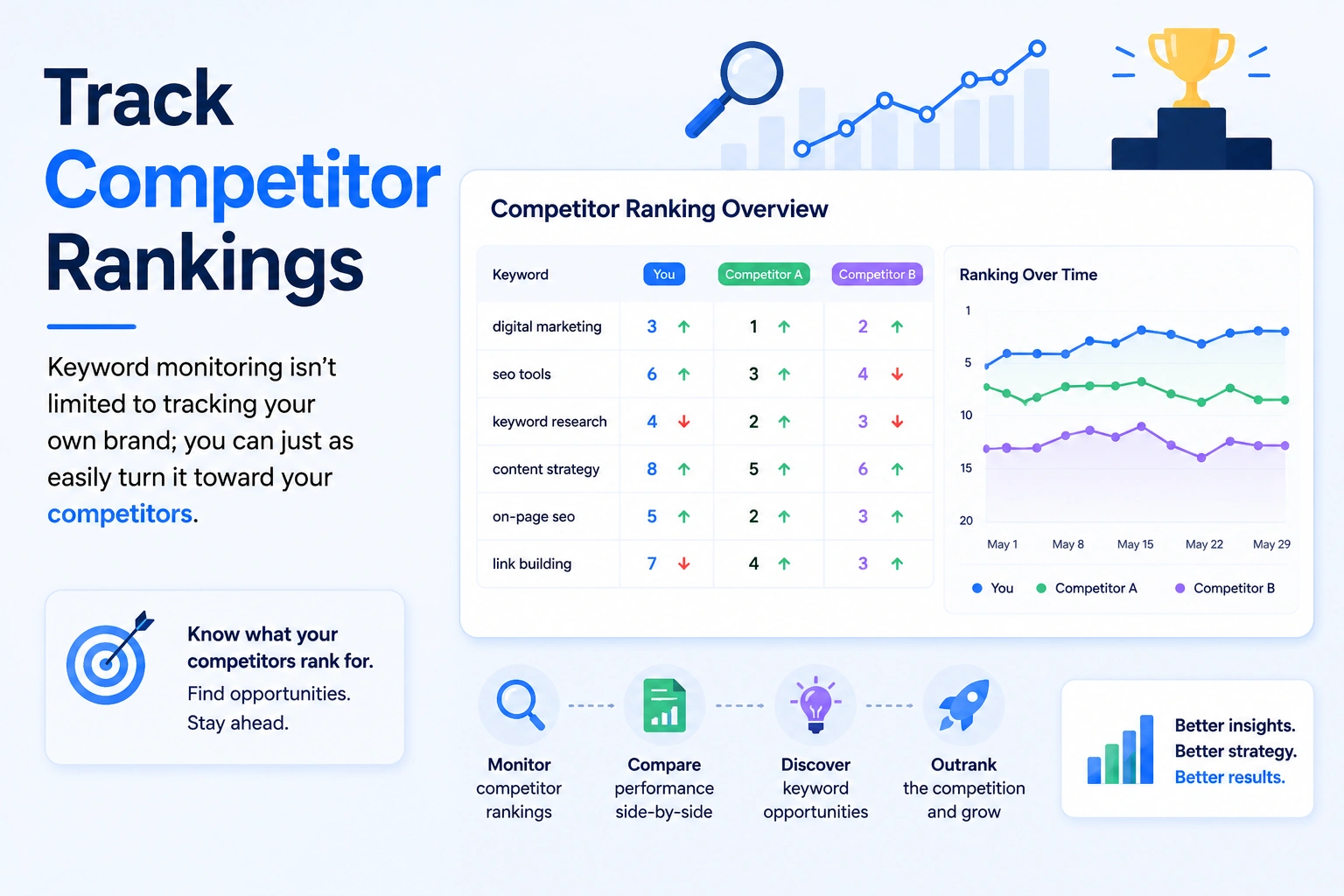
Keyword monitoring isn't limited to tracking your own brand; you can just as easily turn it toward your competitors.
These tools let you uncover which pages are pulling in traffic for them, what keywords they're ranking for, and how their search positions shift over time. This gives you a clear picture of where they're putting their SEO and content efforts.
For example, if you run a digital marketing agency and notice a competitor is consistently ranking for 'affordable SEO services,' you can analyze their page, identify what's making it work.
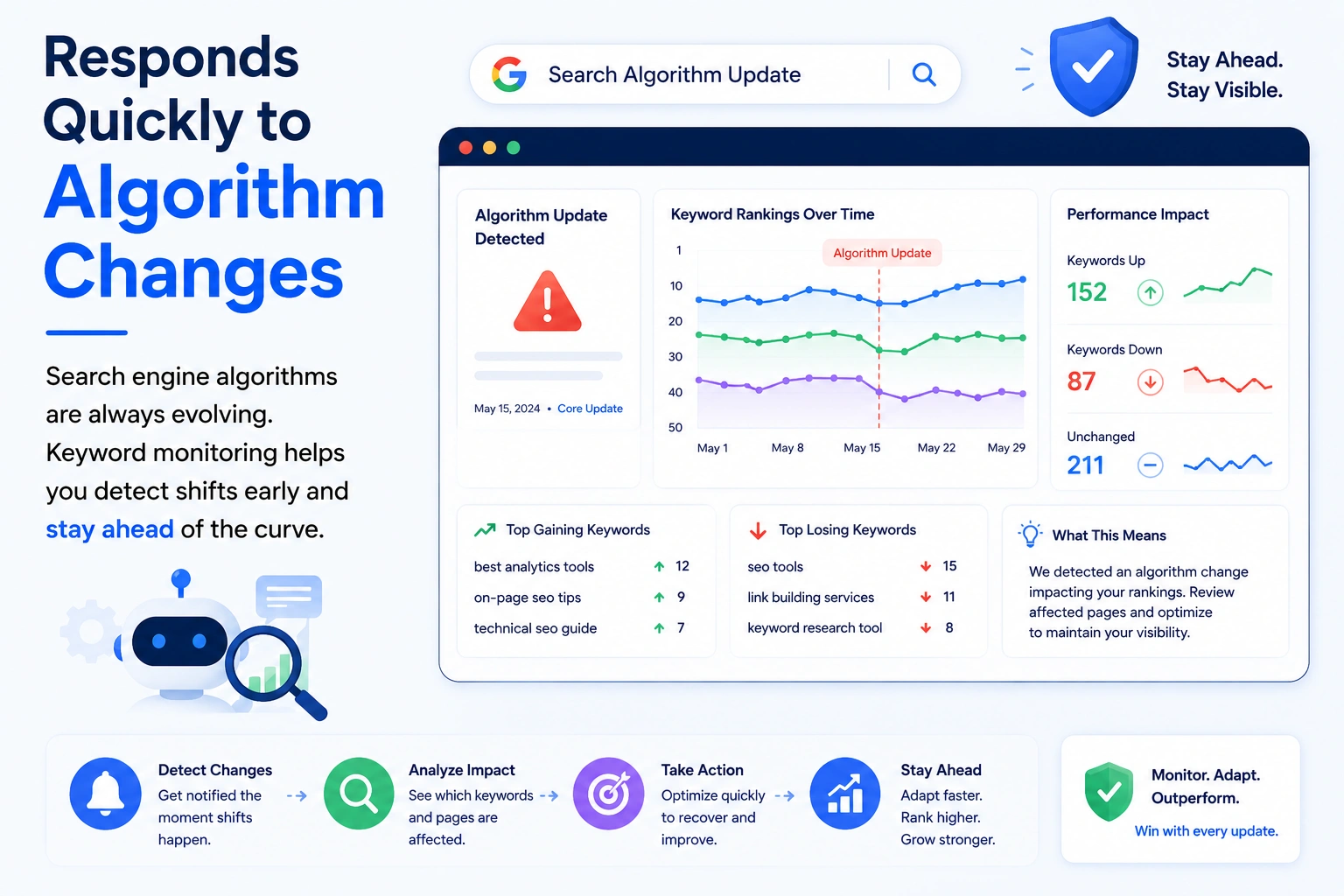
4. Responds Quickly to Algorithm Changes
Search engines like Google update their algorithms hundreds of times a year. Each update can shake up rankings overnight, pushing well-performing pages down without warning.
Keyword monitoring keeps you informed the moment your rankings fluctuate, so you're not discovering a traffic drop weeks after it happened.
For example, if a core algorithm update rolls out and your web development agency's page for "custom web app development" suddenly slips from position 3 to position 14, monitoring alerts you immediately.
You can review the page, adjust your content, and recover your ranking before the drop seriously damages your organic traffic.
5. Measures ROI of SEO Efforts
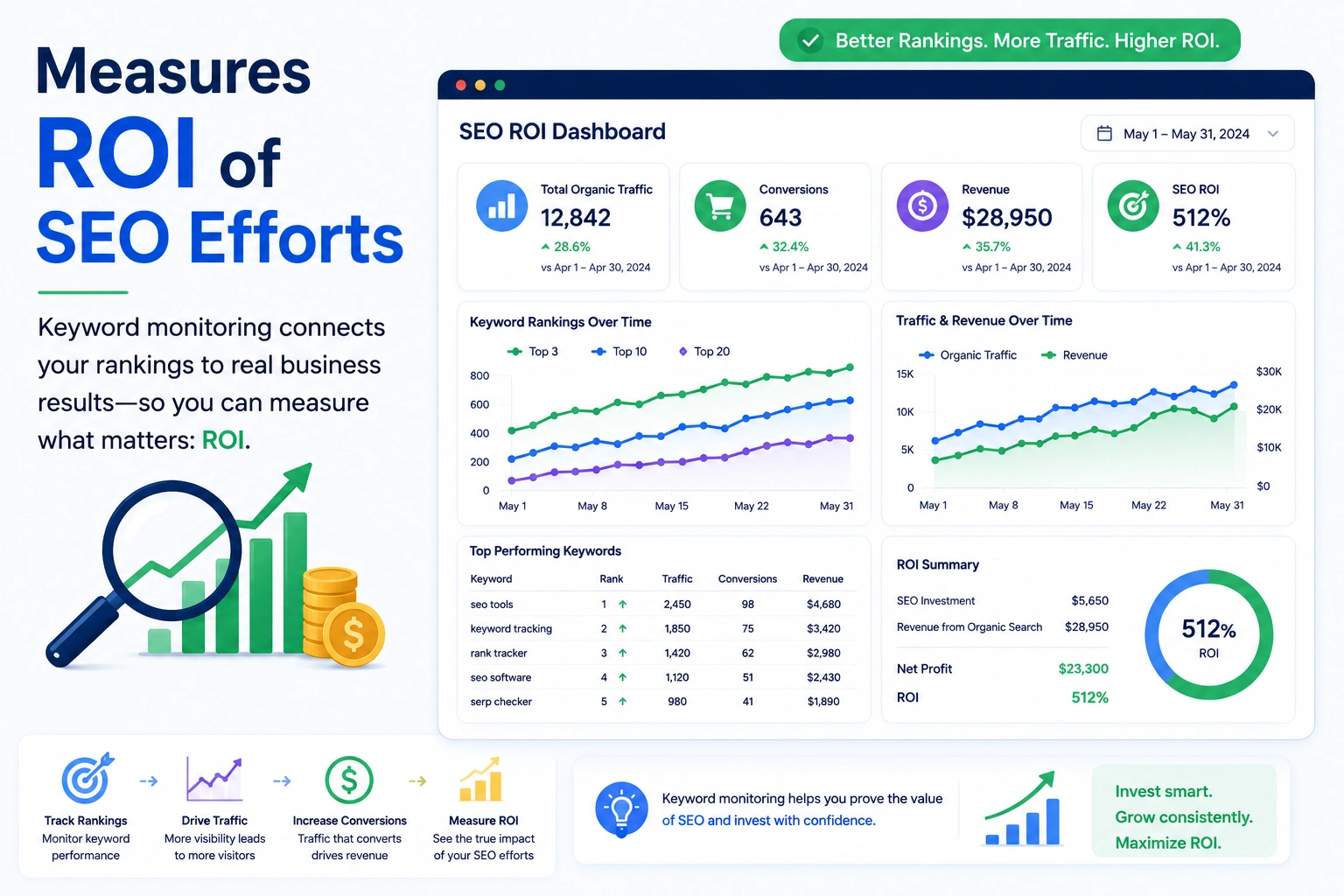
SEO takes time and resources, and stakeholders always want to know if it's paying off. Keyword monitoring gives you concrete, trackable data to answer that question confidently.
By watching how your target keywords move up in rankings over weeks and months, you can directly connect your SEO investments to measurable outcomes like increased visibility, higher click-through rates, and growing organic traffic.
6. Improves Content Strategy
Keyword monitoring doesn't just tell you how your existing content is performing; it shapes what you create next. When you can see which keywords are gaining traction and which are losing ground, you can make smarter, data-driven decisions about where to focus your content efforts.
For example, if you notice that "website redesign checklist" is steadily climbing in rankings and driving solid traffic to your site, it signals strong user interest, giving you the green light to create supporting content like related blog posts, video tutorials, or downloadable guides that reinforce your authority on that topic.

How to Perform Keyword Monitoring?
There are two ways to monitor your keywords: manually or with dedicated tools.
Manual Keyword Monitoring
Manual monitoring involves searching your target keywords directly in Google and noting where your pages appear. While this costs nothing, it is time-consuming, inconsistent, and prone to error since Google personalizes results based on location, search history, and device. It works for very small websites with a handful of keywords, but quickly becomes unmanageable as your site grows.

Using Keyword Monitoring Tools
Paid and freemium tools are far more reliable and efficient. They automate the tracking process, monitor hundreds of keywords simultaneously, and deliver accurate, unbiased ranking data. Some of the most widely used tools include:
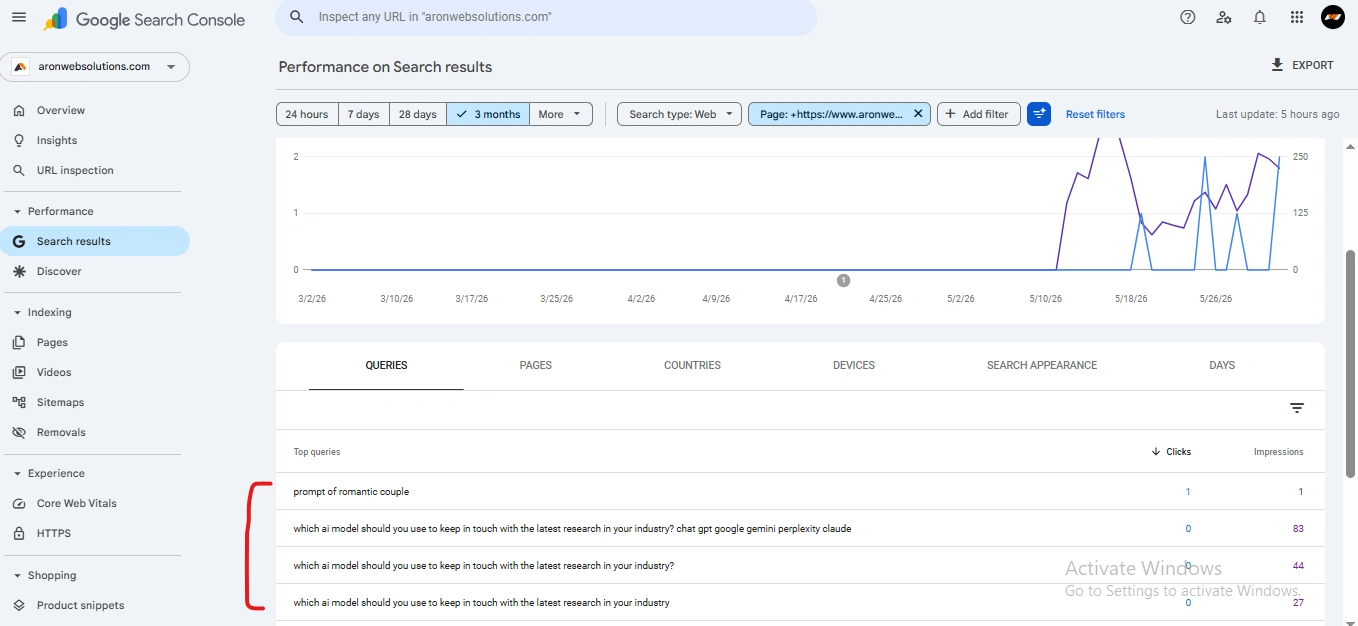
Google Search Console: A free tool by Google that shows which keywords are driving impressions and clicks to your site, along with your average position in search results (check the image below).
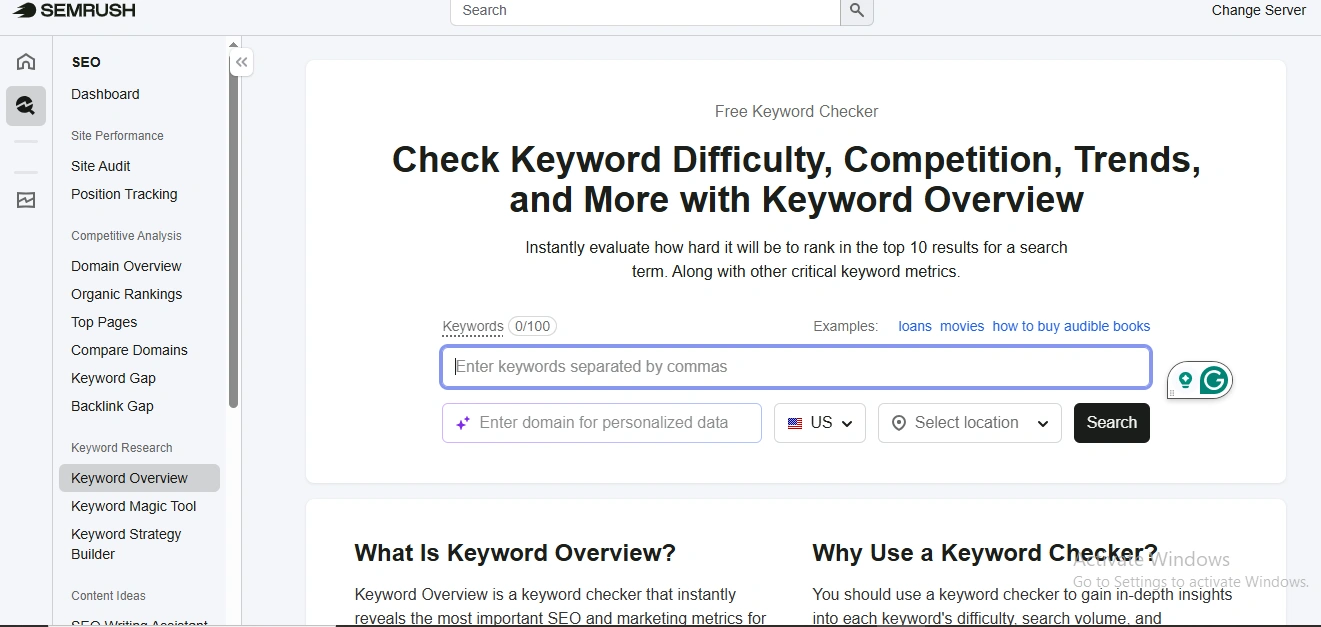
Semrush: A comprehensive SEO platform that tracks keyword rankings, monitors competitors, and provides detailed performance reports. (check the image below).
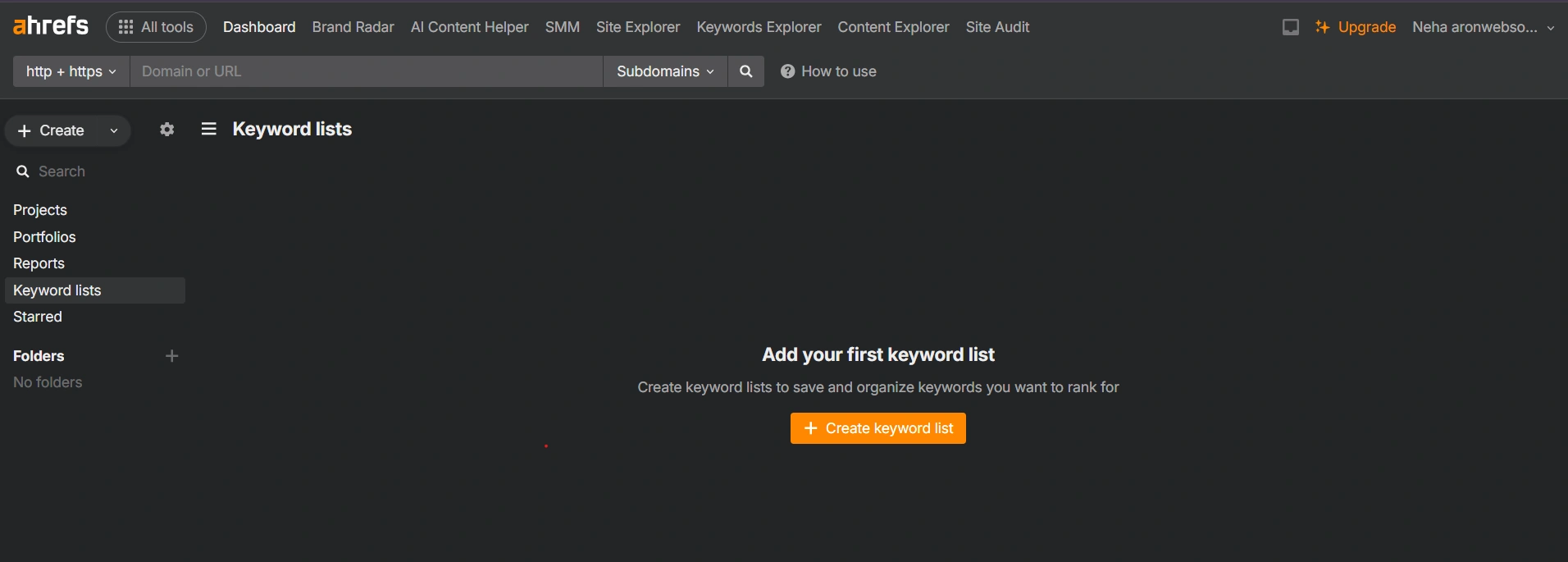
Ahrefs: Known for its powerful rank tracker and backlink analysis, Ahrefs gives you deep insights into both your keywords and your competitors. (check the image below).
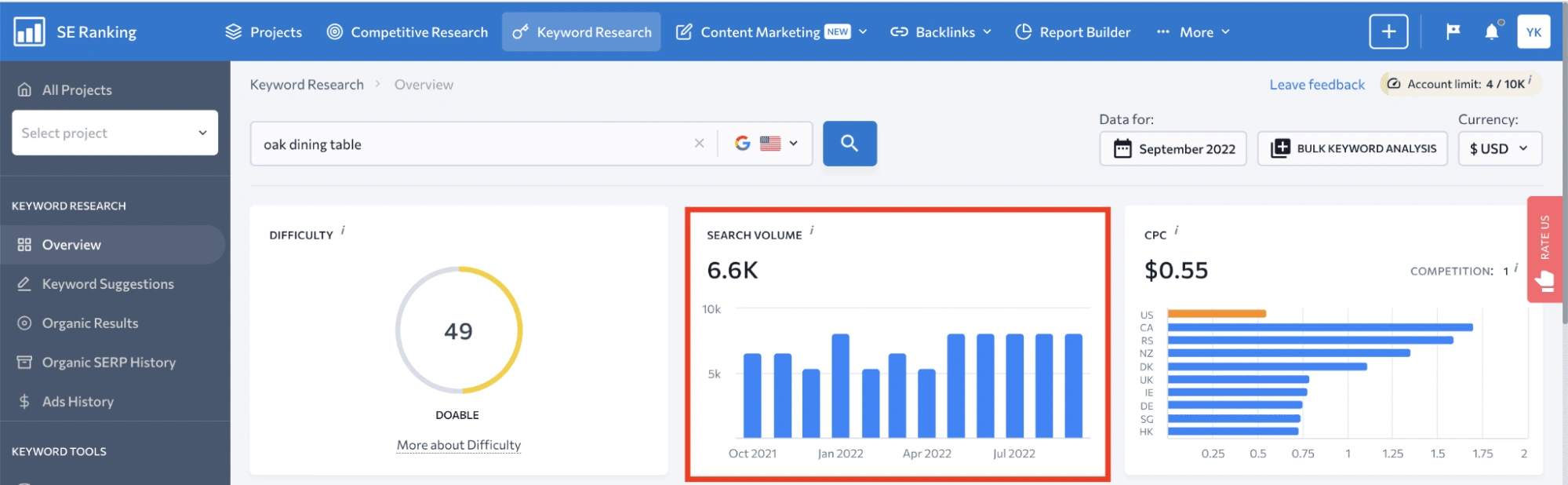
SE Ranking: An SEO platform that offers accurate keyword rank tracking, competitor analysis, website auditing, and reporting tools. It is particularly popular among agencies and small-to-medium businesses for its user-friendly interface and cost-effective pricing (check the image below).
Best Practices for Keyword Monitoring
To get the most out of keyword monitoring, follow these proven best practices:
1. Track the Right Keywords
Don't monitor every keyword under the sun. Focus on keywords that are directly relevant to your business, have a realistic chance of ranking, and align with your audience's search intent. A mix of short-tail and long-tail keywords gives you the best coverage.
2. Monitor Keywords Regularly
SEO is not a set-and-forget strategy. Check your keyword rankings at least once a week. For competitive industries like web design or e-commerce, daily monitoring can help you catch drops early and respond faster.
3. Group Keywords by Topic or Page
Organize your tracked keywords by topic clusters or the specific pages they are tied to. This makes it easier to spot patterns, diagnose issues, and measure the impact of page-level optimizations.
4. Benchmark Against Competitors
Always track a handful of competitor keywords alongside your own. Knowing where they rank for terms you are targeting helps you prioritize your efforts and identify gaps you can exploit.
5. Combine Keyword Data With Other Metrics
Keyword rankings alone don't tell the full story. Pair your monitoring data with organic traffic, bounce rate, and conversion metrics to understand the true impact of your SEO performance.
6. Act on the Data
Monitoring is only valuable if it drives action. When you spot a drop, investigate immediately. When you see a keyword climbing, build on that momentum with supporting content and stronger internal links.
Conclusion
Keyword monitoring is not just a technical SEO task; it is a strategic habit that keeps your entire digital marketing effort on track. From spotting algorithm impact and fixing on-page issues to outmaneuvering competitors and proving ROI, the insights it delivers are invaluable.
That's where SEORAFT comes in. It takes the guesswork out of keyword monitoring by giving you real-time ranking updates, competitor tracking, and actionable insights — all in one easy-to-use dashboard.
Start tracking smarter with SEORAFT today and stay ahead of the competition.
Frequently asked questions
Ideally, you should check your keyword rankings at least once a week. However, if you operate in a competitive industry like web design or e-commerce, daily monitoring is recommended so you can catch and respond to ranking changes quickly.
Keyword research is the process of finding and selecting the right keywords to target in your content. Keyword monitoring, on the other hand, is the ongoing process of tracking how those chosen keywords are performing in search rankings over time. One comes before the other — research first, monitoring second.
Yes. Google Search Console is a free tool that provides basic keyword performance data, including impressions, clicks, and average ranking position. However, for more detailed tracking, competitor analysis, and automated alerts, paid tools like Semrush, Ahrefs, or Moz Pro offer significantly more functionality.
There is no fixed number, but focus on keywords that are most relevant to your business goals. A small web development agency might track 20 to 50 keywords, while a larger site with multiple service pages may need to monitor several hundred. Quality and relevance matter more than quantity.
Yes, keyword rankings have a direct impact on organic traffic. Higher rankings mean greater visibility in search results, which leads to more clicks and visits. Studies consistently show that pages ranking in the top three positions receive the majority of clicks for any given search query.
A sudden drop in rankings could signal an algorithm update, on-page SEO issues, technical errors, or increased competitor activity. Start by checking Google Search Console for any manual penalties or crawl errors, reviewing your on-page SEO elements, and comparing your page against top-ranking competitors to identify what may need improvement.
Absolutely. Most keyword monitoring tools allow you to track competitor rankings alongside your own. This helps you identify which keywords your competitors are winning, where gaps exist, and where you have a realistic opportunity to outrank them.
Yes. If your business targets a specific geographic area, such as a web design agency serving clients in a particular city, keyword monitoring can track location-specific rankings, helping you optimize for local search terms and stay competitive in your target market.
SEO results can’t happen overnight. After making changes to the on-page, it usually takes a few weeks to months to track ranking improvements. Several factors, such as website authority, competition level, and how frequently search engines crawl, also govern the progress of your site. Consistent monitoring helps you track progress and stay patient with the process.
