

Blog Details
- Home
- Blog Details
What is GEO (generative engine optimization) and why does it matter now?
Search has evolved beyond the traditional list of blue links. Today, AI-powered platforms like Google AI Overviews, ChatGPT, Gemini, and Perplexity generate direct answers to users' questions, often reducing the need to click through to websites.
This shift is changing how businesses earn visibility, attract qualified traffic, and build authority online. As AI becomes a primary way people discover information, traditional SEO alone is no longer enough.
Generative Engine Optimization (GEO) helps your content appear in AI-generated responses, ensuring your brand remains visible where users are searching. In this blog, you'll learn what GEO is, how it differs from conventional SEO, and why it matters in 2026.
What is GEO?
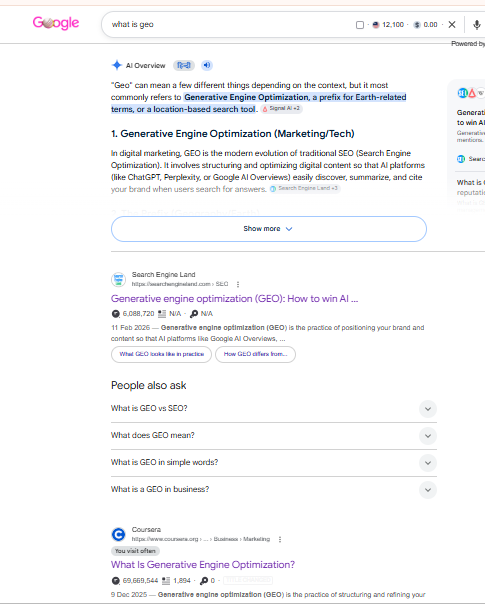
Generative Engine Optimization (GEO) is the process of optimizing your content and online presence so AI-powered platforms like ChatGPT, Google AI Overviews, Perplexity, and Claude can discover, understand, and cite your brand in their responses.
Unlike traditional SEO, which focuses on ranking in search results, GEO aims to make your content part of the AI-generated answers users receive. Let's take a closer look at the key differences between Generative Engine Optimization (GEO) and Search Engine Optimization (SEO)
How does SEO differ from GEO?
Here’s why SEO and GEO aren’t the same:
| SEO (Search Engine Optimization) | GEO (Generative Engine Optimization) |
|---|---|
| SEO is practiced to rank your website higher in search results | GEO is practiced to improve your visibility in AI-generated answers |
| Optimizes for search engines like Google and Bing | Optimizes for AI platforms like ChatGPT, Google AI Overviews, Perplexity, and Claude |
| Success is measured by rankings, clicks, and organic traffic | Success is measured by AI mentions, citations, and brand visibility in AI responses |
| Relies on keywords, backlinks, technical SEO, and on-page optimization | Relies on authoritative, well-structured, and AI-readable content with strong topical coverage |
| Users visit your website through search results | Users may get answers directly from AI, with or without visiting your website |
| The primary goal is to increase organic website traffic | The primary goal is to increase visibility and influence in AI-generated responses |
| Traditional search experience with a list of links | Conversational, answer-first experience powered by generative AI |
Related article: GEO is the New SEO: How to Stay Visible in the Age of AI Search
Why Does GEO Matter Now?
AI assistants are rapidly becoming the primary way people find answers to their questions online. As a result, click-through rates (CTR) have dropped by up to 61% because users can often find the information they need directly in AI Overviews without clicking through to a website.
AI platforms like ChatGPT, Google AI Overviews, Perplexity, and Claude analyze information from multiple trusted sources and generate a single, comprehensive response. If your brand isn't included in those AI-generated answers, you miss a valuable opportunity to reach potential customers—even if your website ranks well in traditional search results.
Benefits of Generative Engine Optimization
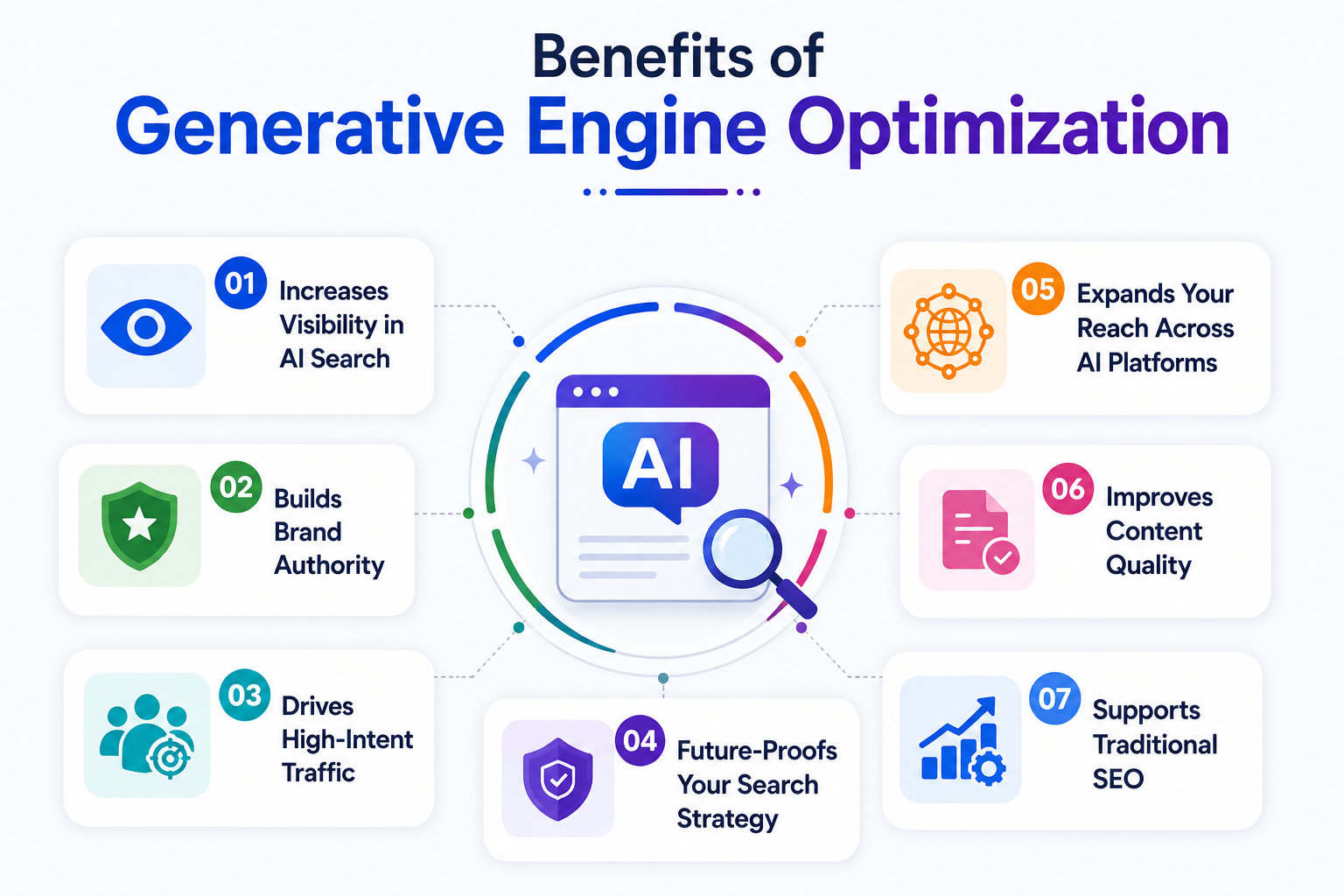
As AI-powered search becomes more popular, GEO offers several advantages for businesses looking to stay visible and competitive. Here's how it can benefit you:
1. Increases Visibility in AI Search
GEO helps your brand appear in AI-generated responses on platforms like ChatGPT, Google AI Overviews, Perplexity, and Claude, giving your content exposure beyond traditional search results.
2. Builds Brand Authority
When AI platforms consistently reference your content, users are more likely to perceive your brand as a trusted and authoritative source.
3. Drives High-Intent Traffic
Users who discover your business through AI-generated recommendations are often further along in the decision-making process, leading to more qualified traffic.
4. Future-Proofs Your Search Strategy
As AI-powered search continues to grow, investing in GEO helps your business stay competitive and adapt to changing search behaviors. Many businesses also choose professional generative engine optimization services to build a scalable strategy and improve their visibility across AI-powered search platforms.
5. Expands Your Reach Across AI Platforms
Optimizing for GEO increases your chances of being discovered across multiple AI assistants instead of relying solely on traditional search engines.
6. Improves Content Quality
GEO encourages the creation of comprehensive, accurate, and well-structured content that benefits both AI systems and human readers.
7. Supports Traditional SEO
Many GEO best practices, such as creating authoritative content, improving technical SEO, and building topical expertise, also strengthen your search engine rankings.
How to Optimize Your Website for GEO
Here are the key strategies to optimize your website for Generative Engine Optimization (GEO):
Create High-Quality Content
Search engines no longer favor keyword-stuffed, low-quality content. Instead, they prioritize content that showcases in-depth research, factual accuracy, and delivers genuine value to users.
Focus on Search Intent
Try to understand the purpose behind someone's online search. Address users' needs by including FAQs, step-by-step guides, comparisons, and practical examples in your content.
Build Topical Authority
Focus on covering all the relevant questions and search queries related to your topic rather than concentrating solely on keywords. Creating comprehensive content helps establish topical authority and improves the overall user experience.
Use Clear Structure
Structure your content with headings (H1, H2, H3), 3-4-line paragraphs, tables, figures, and bullet points. A clear structure improves readability for both users and AI. You can also use generative engine optimization tools to evaluate your content's structure, identify gaps, and optimize it for better visibility across AI-powered search platforms.
Demonstrate Expertise and Credibility
Create content that reflects your knowledge and experience. Support your factual claims with correct information, reputable sources, and case studies to gain users’ and search engines’ trust. If needed, partnering with experts who provide SEO consulting services can help you build a more effective SEO and GEO strategy.
Optimize for Conversational Queries
Write content that satisfies users’ queries in a conversational style. Use the same language your audience is likely to use when searching, and provide clear, direct answers to improve visibility in AI-powered and voice search results.
Conclusion
Generative Engine Optimization is simply SEO that has evolved over time. As GEO continues to reshape how people search for and interact with content, businesses must adapt and evolve their strategies to remain visible.
While some challenges remain, such as tracking how your content performs across different platforms, adopting GEO strategies now will put you ahead of many of your competitors.
If you're looking for experts to help you implement effective generative engine optimization services and take the burden off your shoulders, partner with SEO raft today and elevate your business to the next level.
